Hagued Mums – Exclusive Investigation
12th November 2025
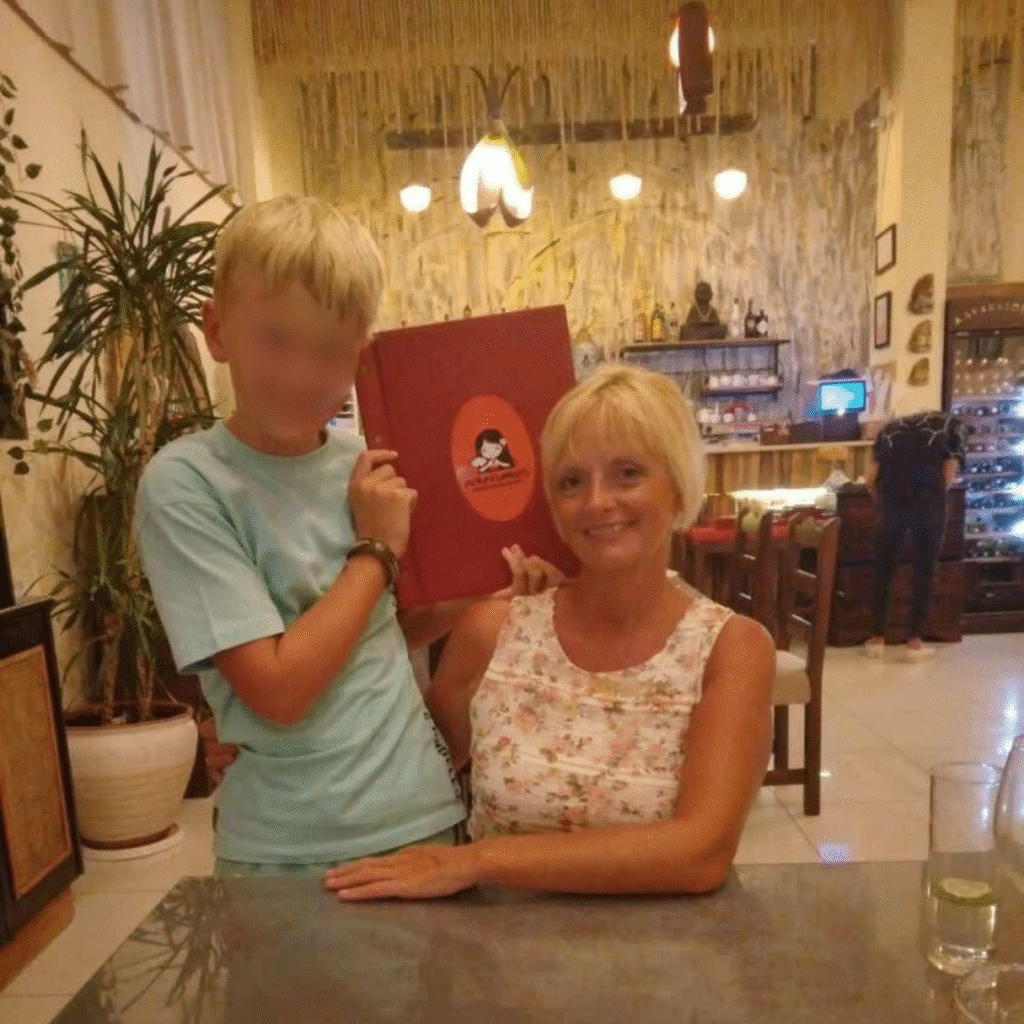
In the quiet village of Styal, Cheshire, behind the walls of HMP Styal women’s prison, Sarah Turner remains detained—seven months after her dramatic arrest in Northern Cyprus. What began as a desperate attempt to protect her son from alleged domestic abuse has spiralled into a prolonged battle exposing serious failings within the UK’s social care system, particularly the obstructive practices of Bolton’s Local Authority Social Services (LASS) and their refusal to involve wider family networks.
As of today, Sarah’s joined family and criminal proceedings continue to progress in UK courts, where judges have so far handled the case with respect and a focus on child welfare. A hearing took place on 11th November, though the outcome remains unknown. Sarah now has free access to her family, friends, and legal team, and has been moved to a more comfortable room with a supportive cellmate—conditions that have convinced her not to apply for bail for fear of being moved back into harsher environments.
But the central crisis persists: her 12-year-old son remains isolated from his loving maternal family, in what supporters describe as deliberate, harmful actions by Bolton LASS that appear to defy judicial direction.
A Decade of Struggle
Sarah Turner’s ordeal began in 2013 when she ended an 18-month relationship marked by allegations of violence and coercive control. Her son was just five months old. Like many survivors of domestic abuse, Sarah then faced years of contentious family court battles. She says she was advised to “minimise” abuse reports to avoid antagonising her ex-partner, fearing it could jeopardise custody.
By 2021, a family court judge warned that non-compliance with contact orders could result in the father gaining residency—despite the allegations. Fearing for her son’s safety, Sarah fled to the Turkish Republic of Northern Cyprus (TRNC), a region not bound by the Hague Convention on international child abduction. There, friends say, her son thrived: a happy boy living peacefully with his mother and their family dog.
The Arrest and Alleged Trafficking
That peace shattered on 7th April 2025. Sarah was arrested at her workplace under a false pretext involving her dog. TRNC police told her there was an issue that required her to accompany them and took her into custody in the north. She was held in a TRNC detention facility for five days. Advocates say that after those five days she was illegally handed over across the border to southern Cypriot authorities—a transfer they describe as tantamount to human trafficking and a grave breach of international law. Meanwhile her then-11-year-old son was seized separately and transported across the Green Line to a children’s home in southern Cyprus, where he endured the same period in a facility where the primary language—Greek—was one he did not understand.
Following the cross-border handover, Sarah was taken to Nicosia Central Jail in the south, where she spent three weeks in harsh conditions—denied basic hygiene items such as toilet paper and soap, and refused access to a lawyer, phone calls, or family visits. Held in isolation and without paperwork explaining the legal basis for her detention or transfer, she was eventually deported to the UK on 24th April 2025 and placed in HMP Styal.
Advocates argue that these events violated multiple provisions of UK and international law, including Articles 3, 5, 6, and 8 of the European Convention on Human Rights, as well as the Nelson Mandela Rules governing the treatment of prisoners.
- Article 3 of the Human Rights Act 1998 (incorporating Article 3 of the European Convention on Human Rights): Prohibition of inhuman or degrading treatment. The denial of basic hygiene facilities and prolonged isolation fall below minimum standards of humane detention.
- Article 8 of the Human Rights Act 1998 (Article 8 ECHR): Right to respect for private and family life. The total ban on contact with her son, family, and friends, and the restriction on communication, constitute an unjustified interference with family life.
- Article 6 of the Human Rights Act 1998 (Article 6 ECHR): Right to a fair trial. The complete denial of access to a lawyer for three weeks in Nicosia jail, combined with continued restrictions in the UK, prevented Turner from preparing any defence or challenging her detention, breaching her right to legal assistance and to be informed promptly of the reasons for her arrest.
- Article 5(2) ECHR: Right to be informed promptly of the reasons for arrest. Advocates claim Turner was arrested under false pretences and never formally told the charges against her during her time in Cyprus.
- Article 5(4) ECHR: Right to have the lawfulness of detention decided speedily by a court. The absence of any judicial oversight or opportunity to challenge her transfer and detention in Cyprus violated this safeguard.
- Rule 23 of the United Nations Standard Minimum Rules for the Treatment of Prisoners (Nelson Mandela Rules): Prisoners must have access to legal advice without delay; the three-week denial in Nicosia jail contravenes this international standard.
- Rule 35A of the Prison Rules 1999 (applicable once in UK custody): Entitlement to reasonable telephone access; supporters say Turner was denied any phone calls for weeks.
The Child Left Behind
Sarah’s son was also seized and returned to the UK on 24th April. Upon arrival, he was placed in a secret foster home, and his phone and iPad—his only means of contact with his aunt and family—were confiscated. Since then, there has been no contact with his maternal relatives.
Now 12, he has reportedly expressed his wishes clearly to remain connected to his mother and family, but LASS has ignored him entirely. He was presented with just three choices: live with his mother (if released), stay in foster care, or move in with his father—whom he fears. A recent psychological assessment reportedly supports Sarah’s parenting, yet his views remain disregarded.
His maternal aunt, who has applied to care for him until reunification, has been rejected without assessment or explanation. She has been a key figure in his life since birth, and when his mother was arrested, he called her day and night until he too was seized. His aunt worked tirelessly to reach him, fighting every barrier placed in her way, yet her commitment and bond with him have been entirely disregarded by the authorities.
Local Authority Failings and Judicial Frustration

The family and criminal court proceedings were carefully scheduled, but progress has been repeatedly delayed by LASS’s failure to comply with judicial orders. Judges have expressed frustration at missed deadlines and the withholding of crucial reports.
While the courts have treated Sarah with dignity and sought to preserve her bond with her son, LASS has allegedly done the opposite — restricting contact, censoring visits, and blacklisting family members. Since her imprisonment in April, only two visits between mother and son have been permitted — both in October, and only after the intervention of a psychologist who expressed serious concern about the boy’s deteriorating mental health due to prolonged separation from his mother.
Even Sarah’s elderly parents in their 80s have been refused any contact with their grandson. Her mother, frail and wheelchair-bound, is awaiting major surgery later this month and fears she may never see him again. Their letters and birthday gifts are returned unopened.
Despite a judicial order for birthday contact in June, and Sarah securing a family day pass in October, LASS failed to arrange for her son’s attendance. Advocates describe this as emotional abuse and institutional cruelty, accusing the authority of deliberately isolating both mother and child to coerce compliance.
Ofsted Exposed the Same Failings
A May 2025 Ofsted focused visit to Bolton’s children’s services revealed exactly these issues: “an inconsistent approach to the involvement of family networks across child-in-need and child protection planning,” resulting in “some children not afforded the additional safety and support of family and friends.” Despite acknowledging some strengths, Ofsted urged urgent improvements in family engagement—failings that now appear vividly illustrated by Sarah’s case.
The Cover Up
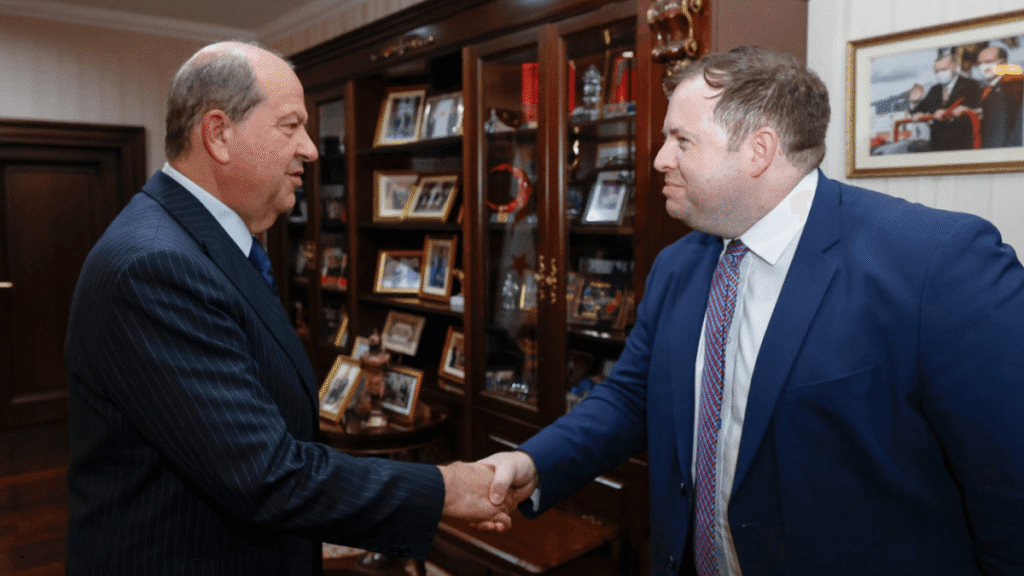
The case has ignited accusations of corruption and political manoeuvring. On 7th March 2025—the very same day—both Sarah’s alleged abuser and UK MP Stephen Doughty were in Nicosia. Doughty met Cypriot and TRNC leaders, ostensibly for “UK support” ahead of Geneva talks on Cyprus recognition, while the ex-partner allegedly appeared at her TRNC home with deportation threats, raising questions about how he obtained her address. This timing is obviously no coincidence, campaigners insist, pointing to an apparent trade: UK diplomatic cooperation in exchange for facilitating Turner’s extradition and abduction.
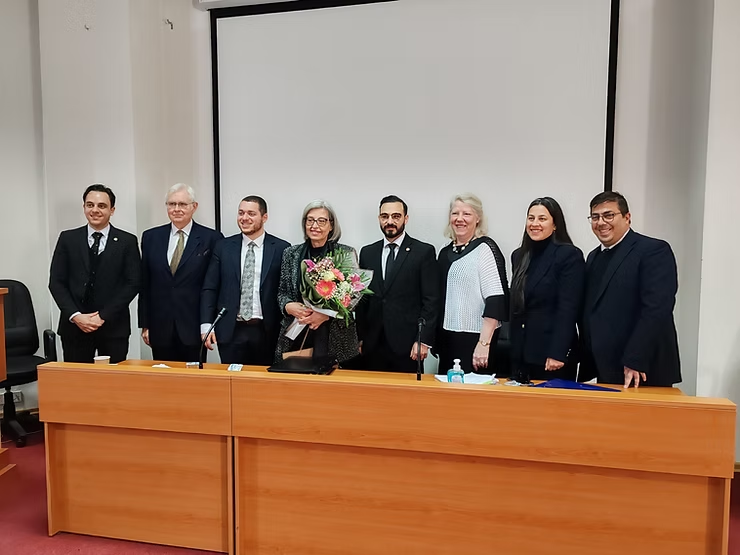
Further scrutiny falls on the Slynn Foundation, a UK organisation conducting judicial training in the TRNC. The foundation held its latest session on 25-26th February 2025—just weeks before the March diplomatic meetings and Sarah’s April arrest—focusing on criminal and civil procedure. Previous sessions occurred in February 2024, February 2023, and virtually in 2022. Advocates argue these ongoing trainings, organised with the British High Commission, coincide suspiciously with TRNC legal reforms making it easier for ex-partners to pursue claims, potentially disadvantaging fleeing mothers, and question whether they laid groundwork for Sarah’s unprecedented cross-border transfer. The foundation lists prominent UK judges, including Dame Lucy Morgan Theis, who issued a controversial gagging order in a 2025 High Court case preventing the naming of a teacher and judge accused of emotionally and physically abusing their five adopted children, —despite a media bid led by the Bureau of Investigative Journalism to lift the order for public interest.
Ironically, the TRNC’s system, though unrecognised internationally, is described by residents as much safer and more child-focused than the UK is, one resident quoted “you can leave your bag unattended in a shop and return later and no one will have touched it” another said “you can leave your doors unlocked, no one will break in“, so the question remains, why does the Slynn Foundation feel they are needed in the TRNC and why have they gone to such lengths to set up ‘training seminars’ with the judges there?
Meanwhile, mainstream media silence continues. No major UK outlet has reported on Sarah’s arrest or detention, despite viral social media campaigns led by groups such as Hagued Mums (@HaguedMums). Family court reporting restrictions and gagging orders are often cited as reasons, but campaigners argue this amounts to a “media blackout” that shields systemic failings and protects institutions from scrutiny.
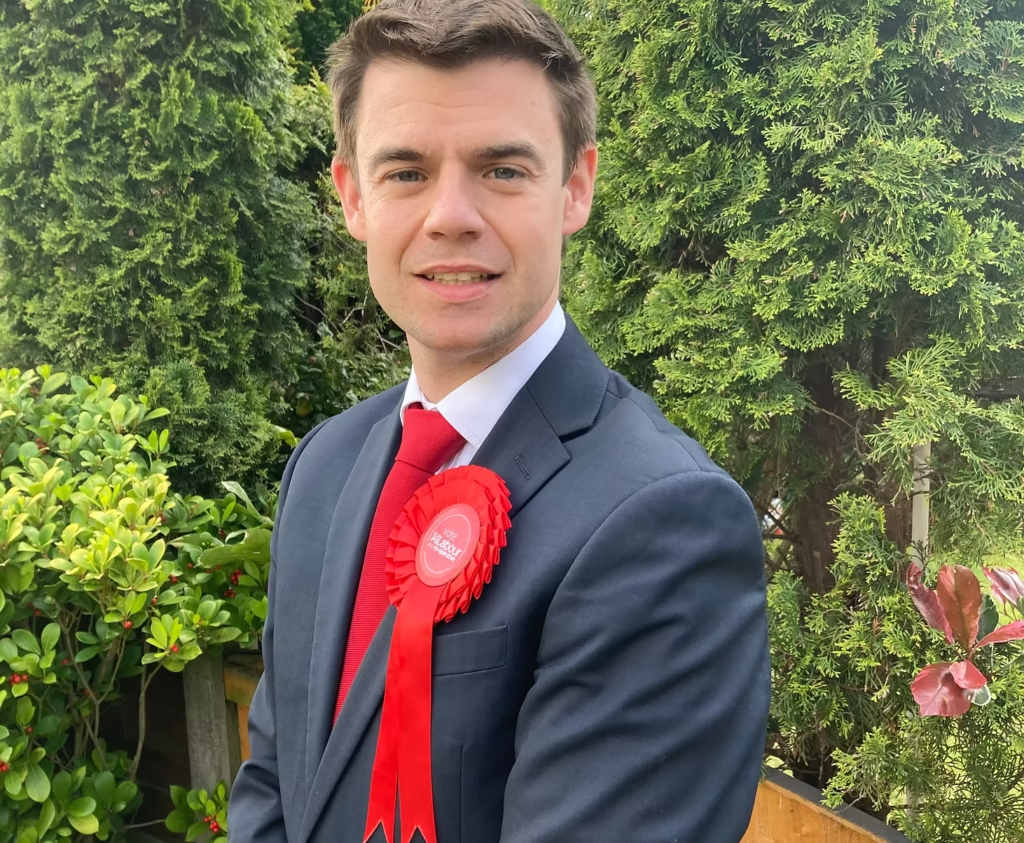
Sarah’s MP, Phil Brickell (Bolton West), has also faced growing criticism. The family has repeatedly contacted him with detailed evidence of LASS’s conduct, yet despite multiple letters and emails, he has offered no response, no action, and no sign of intervention — a silence supporters call indefensible. Why has Brickell remained silent on a grave injustice unfolding in his own constituency? He has not raised the case in Parliament, not demanded transparency, and not acknowledged the public outcry from his constituents.
Phil Brickell’s refusal to act directly undermines the very reforms his party claims to champion. As a Labour MP, he should be on the front line defending victims — yet his silence enables the same broken system to persist. The public deserves answers: Why is Brickell ignoring Sarah and her son? Why has he not stood up in Parliament to demand justice, halt the hearings, and expose the human rights violations? His inaction shames not just him, but the government he represents. It’s time to call out Phil Brickell and demand that he break his silence — now.
This inaction is particularly glaring given the widespread media coverage of the Claire Throssell case — the heartbreaking tragedy in which Throssell’s two sons were murdered by their abusive father during court-ordered contact, despite her repeated warnings. Throssell’s tireless campaigning, alongside Women’s Aid, helped drive the Labour government’s October 2025 repeal of the presumption of parental involvement — a reform heralded as a long-overdue step toward ending the “pro-contact culture” that too often favours abusers over child safety.
Keir Starmer’s government has repeatedly pledged to do more to protect victims of domestic violence, vowing to halve violence against women and girls within a decade and overhaul family courts. Yet in Sarah Turner’s case, those promises ring hollow: a protective mother remains imprisoned, her child is isolated and at risk, and secret hearings push forward custody to an alleged abuser.
Where Are the Answers?
There are still too many unanswered questions, and authorities are refusing to release key details. These are questions that Phil Brickell MP should be raising in Parliament — demanding transparency and accountability.
So why isn’t he?
Is he part of the cover-up that has silenced this family and concealed the truth behind Sarah Turner’s abduction and imprisonment?
The public deserves answers:
- Who orchestrated Sarah’s abduction from the Turkish Republic of Northern Cyprus (TRNC)?
- When and how was this operation organised?
- Who authorised Bolton LASS to cross into the TRNC and seize her son — especially given there were no agreed court orders and the father had never filed a case in the TRNC?
- Who authorised Greater Manchester Police to transport Sarah from London airport directly to Manchester?
- Who coordinated her deportation or extradition, and under what legal authority?
- Which agencies and individuals were involved in this cross-border operation, and when?
- And crucially — how do the Slynn Foundation, MP Stephen Doughty, the Presidents of both the TRNC and Cyprus, Bolton’s Social Services, and Sarah’s alleged abuser all fit into this web of decisions that resulted in the unlawful separation of mother and child?
This is not an isolated incident. The UK family courts have faced criticism for penalising mothers reporting abuse, with children sometimes placed with accused fathers. The Hague Convention, intended to prevent international abductions, is accused of being weaponised against protective parents. In Sarah’s case, the boy’s isolation—no explanations, no uncensored maternal contact—is labelled “psychological torture.”
Sarah Turner’s plight underscores a systemic crisis: when mothers flee abuse, are they criminals or heroes? Until independent scrutiny breaks the secrecy, her son’s future—and those of countless others—remains in limbo. The public must demand answers: Why the delays? Why the silence? And who is truly protecting the child?
Call to Action:
Contact MP Phil Brickell (Phil.Brickell.mp@parliament.uk) demanding immediate intervention, a full explanation for his shameful silence and inaction, and that he raise this case urgently in Parliament. Why has he betrayed Labour’s pledges on domestic abuse? Share widely on social media, tagging @Phil_BrickellMP, @UNSRVAW, @bbcnews, and others to shame him into action. For real-time updates, follow @HaguedMums.
Sign and share our petition Justice for Sarah Turner. https://www.change.org/FreeSarahTurner
Sources include advocacy posts from @HaguedMums, Slynn Foundation website, diplomatic reports, court judgments, Ministry of Justice announcements, and Women’s Aid campaigns; allegations remain unproven in official records, with no public response from involved parties including Phil Brickell MP.